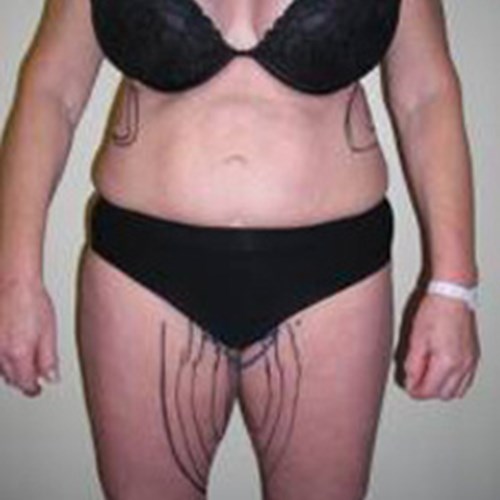
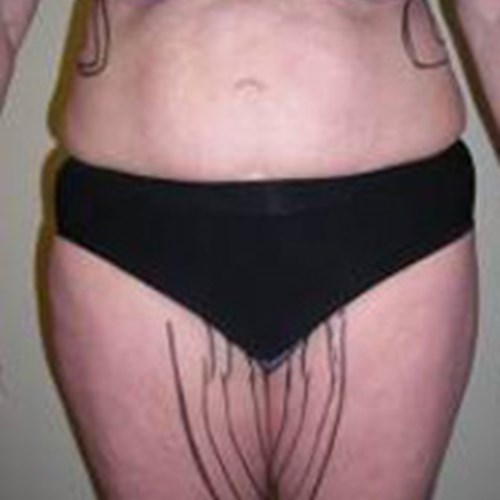
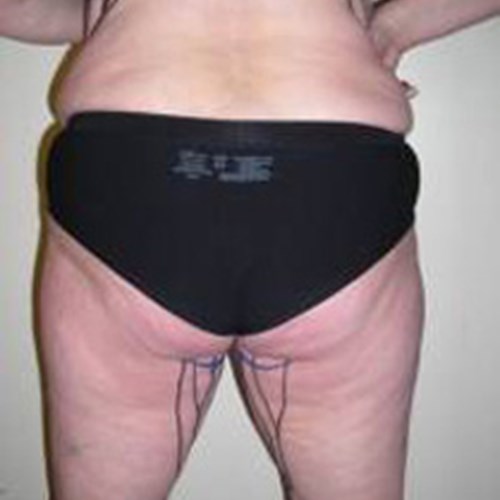
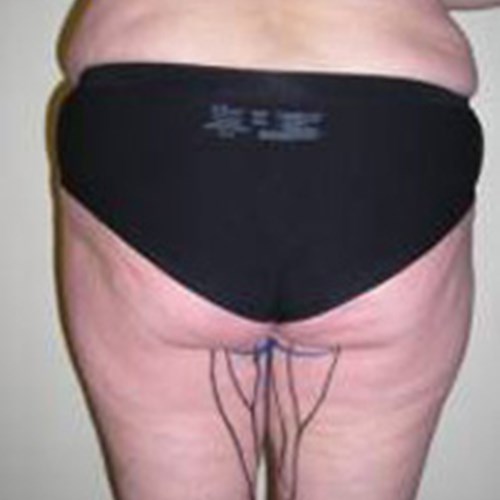
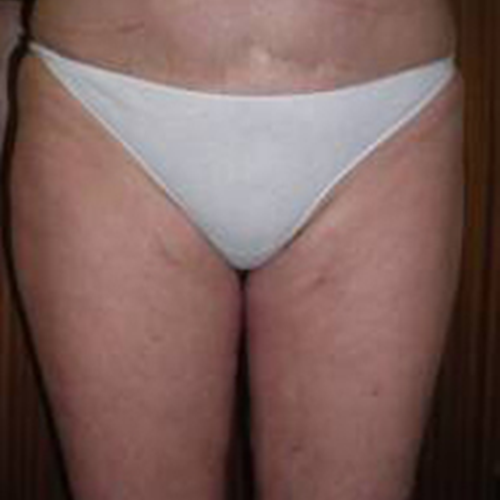
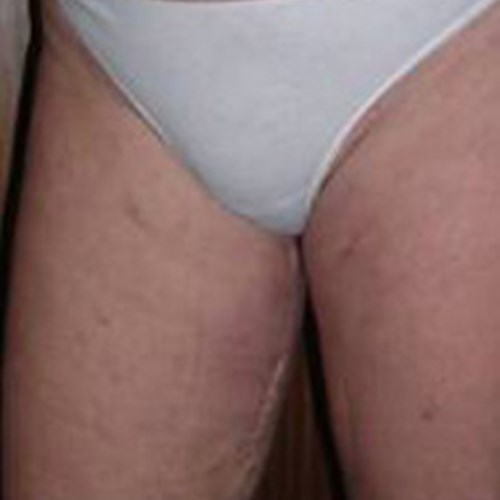
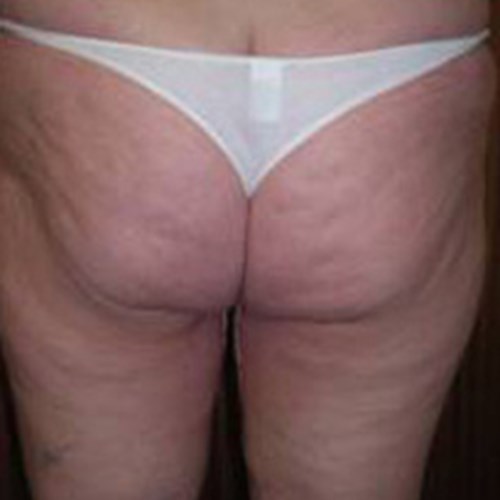
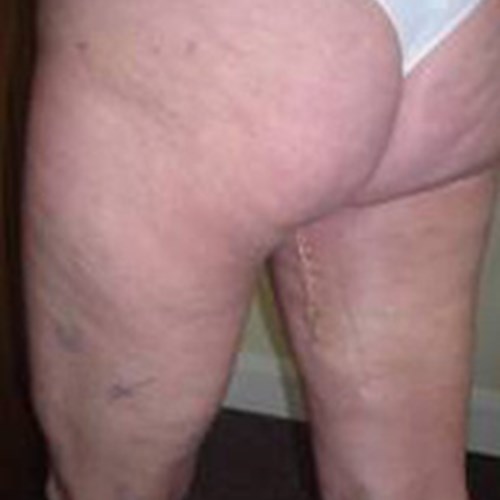
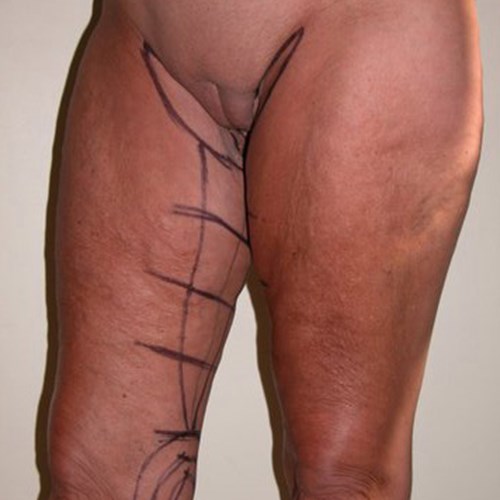
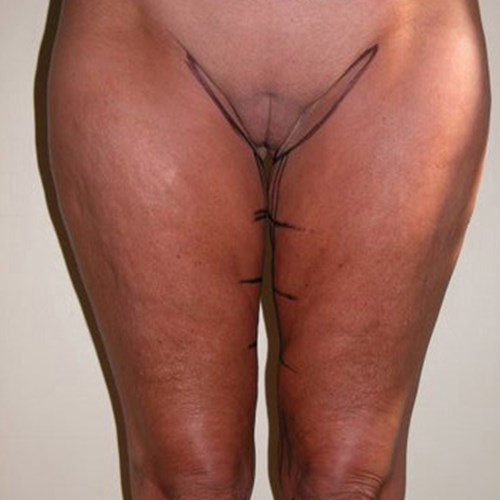
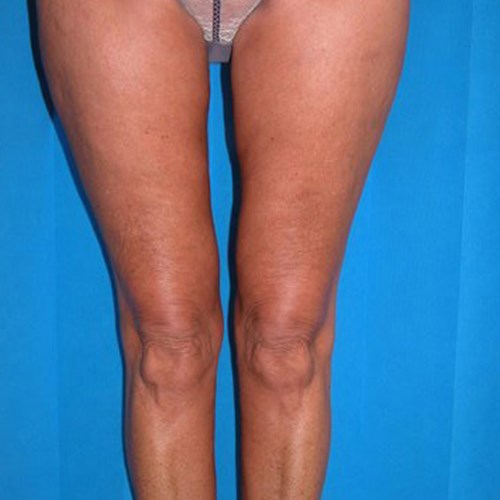
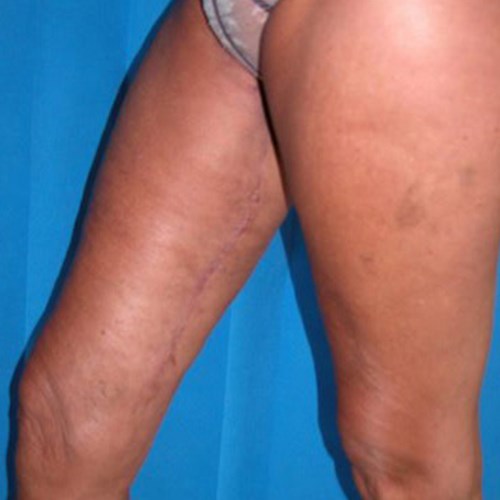
Thigh lift is usually performed under general anaesthesia and usually requires an overnight hospital stay. In mild situations a wedge or ellipse of skin and fat is excised from the upper inner thigh leaving a scar that runs along the upper inner thigh crease ( well hidden ) If the thigh needs to be circumferentially tightened and not only lifted, then another excision of skin and fat is required leaving a scar running from groin crease to knee ( T-shaped scar ). The vertical scar can sometimes be shorter. In addition liposuction is usually performed, which helps to remove additional fat from both inner, and if needed outer thighs too.
What can be expected at the initial consultation?
At the initial consultation you will be assessed as to whether you are a good candidate for thigh lift. Your legs will be carefully examined to assess the amount of excess skin and fat. Your general fitness for the procedure will be evaluated and the potential for problems sought. It is important to know about past medical problems, medication that you are on, and whether or not you smoke.
Your reasons for wanting the procedure will also be discussed. It is important that your expectations concerning the outcome of the procedure are realistic. If they are, you can expect to be happier with the result.
Once you have been fully assessed, an operative plan tailored to your individual needs will be formulated. The incisions to be used, the amount of skin and fat to be excised, and whether liposuction will be used as an adjunct will be discussed with you.
Do not be hesitant to ask questions, now or at any other time.
Medical aids or health insurance companies do not usually provide cover for this kind of surgery, although occasionally a motivation can be done especially if you have lost large amounts of weight.
Preparing for surgery
Ideally surgery is performed when you are fit and healthy. No special diet or exercise program is required prior to thigh lift, but you should be close to your ideal weight. It is a good idea to have a good fluid intake for a few days before your operation. You should not have been on a long-haul flight for 2-weeks prior to surgery.
It is advisable to stop smoking at least six weeks prior to surgery and not to smoke until your wounds have healed - usually about two to three weeks after the operation. It is well known that there is a higher frequency of complications in patients who smoke. Even in those who have stopped smoking the risk of complications is higher than in patients that have never smoked.
On the morning of surgery you should wash well. Prior to surgery, the incision lines will be marked with a pen in your room. Mr. Soldin usually takes photographs for your records immediately before surgery.
The Surgery
Surgery will be performed in an operating theatre under general anaesthesia. You may need a urinary catheter. A thigh lift takes between two and three hours. Following surgery the wounds are closed with dissolving sutures, and drains may well be left in place for a day or longer. Dressings will be applied, and an elasticated support placed on top of the dressings.
What can be expected after the operation?
Following the operation you should be relatively pain free although you may feel some discomfort with movement. You will be given analgesic tablets to take regularly. Daily showers are encouraged. Someone will need to drive you home and help around the house for a few days. You will be given painkillers to take home with you. The drains if needed are usually removed before you go home.
How long does it take to get back to normal?
Healing is a variable process and it may take you 4 - 6 weeks to feel like your old self again. People vary enormously in their recovery period.
The scars are healing well by the end of the first week, but continue to mature for up to a year, by which stage they should be thin, fine, inconspicuous lines. Massage of the scars with an aqueous cream helps, but should only be started after 1 month.
Bruising take about 2 weeks to settle. Swelling can take up to 12 weeks to settle. To help diminish swelling and bruising, elasticated support should be worn for 24 hours a day. Mr Soldin uses MACOM for the elasticated support garments. These can be purchased online and delivery usually takes 48hrs.
Mobilisation should be gentle, but begun early. Vigorous exercise should be avoided for six weeks, until you feel comfortable – your body will tell you if you are pushing it too hard. Do not drive until you really feel well – usually 2-weeks. Shower daily to stay clean.
Depending on the procedure you have, you may be able to begin work after about one week (liposuction), and 2-4 weeks for a full inner thigh lift. This advice is meant to be a guide only and time off work can be considerably longer, particularly if you have complications following the surgery.
What are the risks?
When performed by a qualified plastic surgeon, thigh lift is normally safe and the results predictable. Nevertheless, as with any surgery, there is always a possibility of complications. About 1 in every three people will have some trouble after their operation, and it is important to inform your surgeon or hospital if you are concerned about anything. Complications after surgery including the following:
Swelling is expected and common after any surgery. This usually takes a few months to improve, and as long as 12-18 months to return to normal. Rarely the swelling remains because some of the lymph channels have been damaged during surgery – this causes long term swelling called lymphoedema. Fortunately this is uncommon (<5%), and also mild. It may require longer term use of elasticated support though.
Sensory alterations in the area - numbness occurs in nearly all patients because small skin nerves are cut during surgery but is usually transient. Can take up to two years to resolve. Occasionally some numbness can persist long term, and even involve the leg below the knee.
Bleeding (1-5%) which can lead to fluid collection. This may require drainage with a syringe or, repeat open operation to remove the haematoma.
Infection at the operative site ( < 2%) or elsewhere (e.g. pneumonia)
Loss of tissue ( necrosis ) - Usually small and treated with dressings.
Unsatisfactory scarring - usually not keloid, but scars can stretch or become raised and red.
Asymmetries or irregularities in contour, the commonest being dog-ears at the ends of the scars. These may require simple revision under local anaesthesia.
Seromas, which are collections of clear fluid under the scar, may need repeated aspiration or rarely surgical removal of the collection.
Vulval spreading – Any operation high in the groin crease lifting thigh tissue may cause some pull on the labia. Mr Soldin secures the upper thigh incision to the deep fascia and periosteum to prevent this spreading. It can still occur though after surgery. It is usually mild, and often noticed by the surgeon rather than being pointed out by the patient.
Clots in the legs which can migrate to the lungs. Pulmonary emboli can make you very unwell and even cause death. Fortunately this is rare. Early mobilization, good fluid intake, compression stockings and heparin injections in hospital can lessen the chances of this problem.
Problems with anaesthesia, drugs, etc. These should be rare and the risks will be explained to you by your anaesthetist.
Will the new look last?
Thigh lift produces excellent results for patients with hanging upper thigh skin and fatty excess. In most cases the results are long lasting ( 10 years or more ), especially if after the operation you avoid weight gain, follow a balanced diet and exercise regularly.
Checklist before coming into hospital
Bring all your usual medication, toiletries and pyjamas.
No smoking (six weeks), and no aspirin (2 weeks) before the operation.
If you are worried post-operatively
Telephone the ward of the hospital from which you have been discharged.
Telephone my secretary Angie Harrison during office hours – 07961221874
In an emergency (and you have failed to contact me by the above two methods) then please telephone St George’s Hospital (020 8672 1255) and ask them to either bleep me or the Resident Plastic Surgery doctor on call (Bleep 7050).